tldr: the scotch industry ships 1.4 billion bottles a year, and the biggest brands quietly raise prices while watering down their product. overpriced: singleton 12, bowmore 12, talisker 10, balvenie 12 doublewood, glenlivet 18, oban 14, glenfiddich 18 - all chill filtered, mostly 40-43%, selling you the label. worth it: tomatin 12, glen garioch 12, benromach 10, benriach 12, deanston 12, glen scotia 15, craigellachie 13 - higher proof, non-chill filtered, no shortcuts, often cheaper.
the scotch whisky industry ships over 1.4 billion bottles worldwide every year. the biggest brands quietly raise their prices, water down their product to the legal minimum, and strip out flavor through chill filtration so the whisky looks prettier on the shelf. you’re paying for the label, not the liquid.
this guide calls out seven single malt brands that charge a premium for brand recognition and seven that deliver quality whisky at honest prices. for indian drinkers this matters because scotch prices here are already inflated by excise duties. a brand tax on top of government tax means you get robbed twice.
what makes a scotch overpriced?
here’s what to watch for when judging whether a scotch is worth its price tag:
- 40% abv (alcohol by volume): this is the legal minimum for scotch. bottling at 40% means the distillery is stretching their whisky with as much water as legally allowed
- chill filtration: removes fatty acids and proteins that carry flavor and texture, just to prevent cosmetic cloudiness
- caramel coloring (e150a): added to make the colour consistent. a sign the distillery cares more about shelf appearance than authenticity
- price increases without quality changes: the whisky hasn’t improved, but the price has gone up 40-60% in five years
the brands worth your money tend to do the opposite: bottle at 46%+, skip chill filtration, skip caramel coloring, and keep prices honest.
the 7 overpriced scotch brands
7. singleton 12 year old
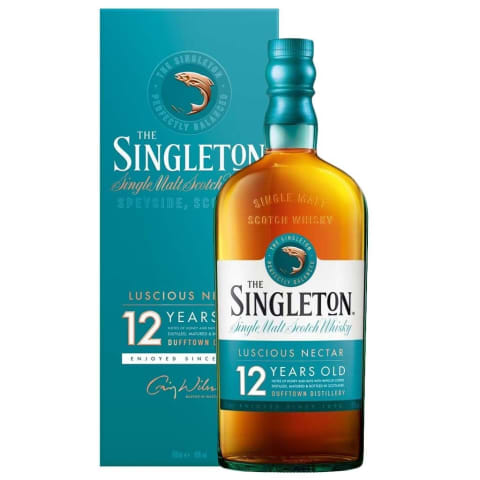
the singleton isn’t even a real distillery. it’s a brand name diageo invented in 2006 to slap on whisky from three different distilleries. glen ord in the highlands sends whisky to asia. dufftown in speyside goes to europe. glendullan, also in speyside, goes to north america.
three different whiskies with three different flavour profiles, all hiding behind the same label at 40%, chill filtered, with caramel coloring.
diageo positioned it as a “gateway into single malts,” which is corporate speak for “designed to be as inoffensive as possible so it sells in volume.” the singleton moves roughly 800,000 cases a year. one diageo executive publicly bragged about charging 40% more in taiwan by simply adding one additional year of aging. that tells you everything about how this brand is managed.
the verdict: at the prices charged in india, you’re buying a product engineered in a boardroom.
6. bowmore 12 year old
bowmore is the oldest distillery on islay, founded in 1779. that heritage should mean something, but their 12 year old official bottling is one of the most divisive whiskies in scotch. reviews range from “beautifully balanced” to “tastes like wet cardboard and burnt plastic.” that’s not complexity. that’s inconsistency.
bottled at 40%, chill filtered, loaded with caramel coloring. beam suntory owns it and has stripped this whisky to its bare minimum. the frustrating part is that independent bottlers who get bowmore casks at cask strength without chill filtration produce stunning whisky from this distillery. the spirit itself is excellent. what gets done to it before it reaches you is the entire problem.
the verdict: you’re getting a neutered version of what bowmore actually tastes like.
5. talisker 10 year old
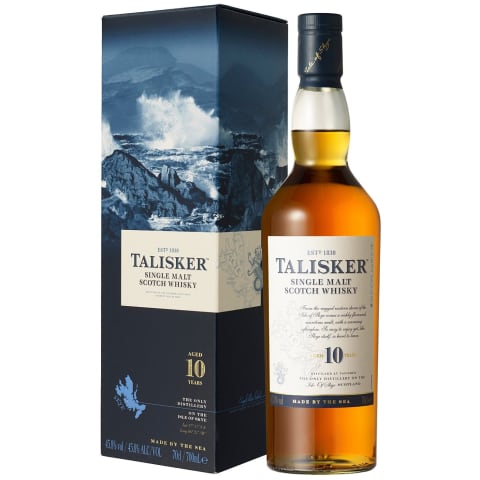
talisker used to be one of the easiest recommendations in scotch. a peated island malt from the isle of skye with sea salt, black pepper, and campfire smoke. at 45.8% abv it’s bottled at a respectable strength, which sets it apart from the other overpriced picks. the liquid isn’t the problem. the price is.
five years ago, talisker 10 was significantly cheaper globally. today it costs considerably more, and the whisky hasn’t changed. diageo’s pricing strategy has. multiple critics have noted that recent bottlings feel diminished compared to older versions of the same expression.
the verdict: talisker 10 is no longer the no-brainer it used to be. it’s now competing against bottles from smaller distilleries that offer equal or better whisky for significantly less money.
4. balvenie 12 year old doublewood
balvenie is genuinely beloved, and the doublewood isn’t bad whisky. it spends 12 years in bourbon casks, then 9 months in oloroso sherry. tasting notes include honey, vanilla, and dried fruit. the distillery even maintains its own malting floor and cooperage, which is rare.
but this bottle used to cost much less globally. the price has climbed 50-60% while the whisky hasn’t gotten any better. william grant and sons know balvenie’s reputation lets them charge whatever they want. at 43% abv with chill filtration, you’re paying premium prices for what used to be a cheap daily drinker.
the verdict: the brand premium has outgrown the quality of the liquid.
3. glenlivet 18 year old
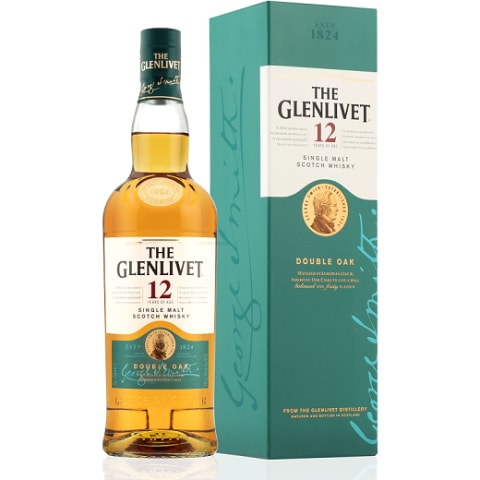
glenlivet is one of the two biggest names in single malt alongside glenfiddich. the 12 year old practically invented the category for many drinkers. but the 18 year old is where the name tax really kicks in.
it’s bottled at 43%, chill filtered, and uses caramel coloring. for an 18 year old single malt at that price, you should be getting natural colour and non-chill filtration at minimum. when critics describe an expensive bottle as “pleasant and approachable,” that’s not a compliment at that price point. that’s a polite way of saying it lacks the depth and complexity that the price tag promises.
the verdict: there are 18 year old single malts from smaller distilleries at the same price with more character, higher proof, and no artificial shortcuts.
2. oban 14 year old
oban is diageo’s second smallest distillery, with only two pot stills. they can’t make much whisky, so instead of keeping the price honest, diageo has pushed prices up dramatically over the past decade. 43% abv, chill filtered.
the distillery uses worm tub condensers which should give the spirit real weight, but diageo dials that character back before bottling. even diageo’s own portfolio undercuts oban - clynelish 14, another diageo highland malt, offers a similar coastal profile with more complexity at a lower price.
the verdict: when a company’s own cheaper product beats the expensive one, the pricing is indefensible.
1. glenfiddich 18 year old
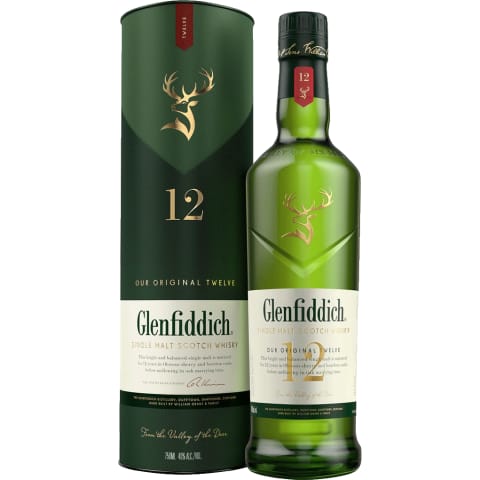
the best-selling single malt in the world. the 18 year old commands a serious premium. in the uk, it’s bottled at just 40% abv, the legal minimum. the us version is 43% but still chill filtered.
in 2026, multiple critics described recent bottlings as feeling “diminished.” one reviewer called it “anemic and fragile” compared to what it used to be. and glenfiddich’s own 15 year old, which uses their unique solera system, consistently gets better reviews at roughly half the price. when your cheaper bottle outperforms your expensive one, something has gone wrong.
the verdict: peak brand tax. you’re paying for the name glenfiddich, not for what’s in the bottle.
the 7 scotch brands worth your money
these are the distilleries doing everything the big brands refuse to do: higher proof, no chill filtration, no artificial coloring, and whisky that tastes like the people making it actually care.
7. tomatin 12 year old
tomatin sits in the highlands near inverness and is one of the most underappreciated distilleries in scotch. bourbon barrels and sherry casks. 43% abv. reasonably priced compared to big-name competitors.
baked apple, vanilla, butterscotch, and warm cinnamon. it drinks like something twice the price. founded in 1897, the distillery produces over 5 million litres a year, but most of it disappears into blends. the current ownership has invested heavily in the single malt range, but the name recognition hasn’t caught up.
no brand awareness means no brand tax. no marketing markup. just solid highland whisky at a price that makes the overpriced bottles on this list embarrassing. their cask strength expression is one of the best value propositions in scotch right now.
for indian buyers: tomatin occasionally appears at duty-free shops and select premium stores. worth grabbing if you spot it.
6. glen garioch 12 year old
glen garioch is the furthest east distillery in scotland, sitting in aberdeenshire. it’s owned by beam suntory, the same company that bottles bowmore at 40% with chill filtration. with glen garioch they do the opposite.
glen garioch 12 is bottled at 48%, non-chill filtered, matured in bourbon and sherry casks. that’s 8% more alcohol than bowmore for similar money with none of the industrial processing. founded in 1797, it’s one of the oldest distilleries in scotland and still produces in small batches.
sweet porridge, brown sugar, baked pears, and a salty finish that grips your palate. at 48%, this whisky has real weight and texture that you simply don’t get from 40% bottles.
for indian buyers: look for this at duty free. it’s proof that beam suntory can make excellent whisky when they actually try.
5. benromach 10 year old
benromach is owned by gordon and macphail, one of the most respected independent bottlers in scotland since 1895. they’ve been in the whisky business longer than many distilleries have existed. the distillery sits in speyside and produces a style that’s genuinely unusual for the region: a lightly peated malt with real depth.
43% abv, aged in bourbon and sherry casks. the peat isn’t islay-level. think gentle campfire rather than a burning hospital. it gives the whisky a backbone that speyside rarely produces. benromach was also the first distillery in scotland to achieve organic certification for some releases.
for indian buyers: benromach combines experience with creative risk-taking. a 10 year old that embarrasses 12 and 15 year old whiskies from bigger brands.
4. benriach 12 year old (the smoky twelve)
benriach is a speyside distillery now owned by brown-forman, the same company behind jack daniel’s and woodford reserve. the 12 year old was completely reformulated in 2020 under master blender rachel barrie. she rebuilt the range from the ground up.
triple cask matured in bourbon, sherry, and port casks. 46% abv, non-chill filtered. the port cask influence adds layers of dark berry fruit and chocolate that you rarely find in speyside at this price. it has won multiple awards at international spirits competitions.
for indian buyers: at roughly the price of a glenlivet 18 at duty free, you get more proof, better cask work, and no artificial processing. that’s what real value looks like.
3. deanston 12 year old
deanston should make every overpriced brand on this list uncomfortable.
46.3% abv. non-chill filtered. no caramel coloring. natural colour only. and it costs less than oban, less than balvenie doublewood, and dramatically less than glenfiddich 18.
read that list again. higher proof, no artificial processing, honest presentation, and it costs less than the brand-tax bottles.
deanston sits in the highlands in a converted cotton mill and is the only distillery in scotland entirely self-sustaining for electricity, running its own hydroelectric dam. the 12 year old is matured exclusively in ex-bourbon casks and delivers honeycomb, barley sugar, citrus, and a waxy mouthfeel that draws comparisons to bottles costing twice as much.
for indian buyers: this is the bottle that proves you don’t need to chase famous names to get excellent scotch.
2. glen scotia 15 year old
glen scotia is one of only three surviving distilleries in campbeltown, a region that once had over 30 distilleries at its peak in the late 1800s. that scarcity makes campbeltown whisky genuinely special.
matured in first-fill bourbon casks with a sherry finish. 46% abv, non-chill filtered. maritime salt from the mull of kintyre coastline, dried fruits, vanilla, oily waxiness, and a finish that keeps going long after you swallow.
campbeltown malts carry something in their dna that other regions can’t replicate: the sea air in the warehouses, the specific microclimate, the water. glen scotia has been winning serious awards recently, and the whisky community is paying close attention. but the prices haven’t caught up yet.
for indian buyers: this is the window you want to jump through. once campbeltown gets the mainstream recognition it deserves, these bottles won’t stay at current prices.
1. craigellachie 13 year old
craigellachie sits in speyside surrounded by famous neighbors like macallan, glenfiddich, and aberlour. while those distilleries chase mainstream appeal with smooth, inoffensive expressions, craigellachie leans into everything that makes it weird. their tagline is “a most dangerous dram.”
46% abv. non-chill filtered. no caramel coloring. it’s one of the few distilleries still using traditional worm tub condensers instead of modern shell-and-tube systems. worm tubs create a heavier, meatier spirit with more character. the distillery also has exclusive use of the only oil-fired malting drum at the glenesque maltings, leaving a savoury, almost umami-like depth you won’t find anywhere else in speyside.
tropical fruit, toasted hazelnuts, honey, and campfire smoke, all at once. the craigellachie 31 year old won world’s best single malt at the 2017 world whiskies awards. the 13 year old shares that dna at a fraction of the cost.
compare that to the overpriced list where 40%, chill filtered, and caramel coloured is the standard. this is what happens when a distillery prioritizes the whisky over the quarterly earnings call.
for indian buyers: craigellachie 13 is the bottle that proves you don’t need to spend big to get world-class scotch. grab it at duty free if you see it.
the pattern: what separates overpriced from worth it
| feature | overpriced brands | worth-it brands |
|---|---|---|
| abv | 40-43% (minimum/near-minimum) | 46%+ (more flavour, more value) |
| chill filtration | yes (strips texture) | no (retains mouthfeel) |
| caramel coloring | yes (fake consistency) | no (natural colour) |
| pricing trend | steady increases, no quality improvement | honest prices, quality-focused |
| what you’re paying for | brand recognition, marketing | the actual whisky |
how to apply this in india
scotch prices in india are brutal because of state excise duties. a bottle that costs rs 3000 at duty free might cost rs 6000-8000 in a state retail shop. this makes buying smart even more important.
at duty free: skip the glenfiddich 18 and glenlivet 18. look for craigellachie 13, deanston 12, glen scotia 15, or benriach 12. you’ll spend the same or less and get dramatically better whisky.
at indian retail: if you’re stuck paying full indian prices, consider whether the best scotch under 5000 in india list offers better value than chasing overpriced international names.
the general rule: look for bottles that are 46%+, non-chill filtered, and from distilleries you haven’t heard of. the less marketing budget a distillery has, the more of your money goes into the actual liquid.
drink responsibly. expensive doesn’t mean better, and cheap doesn’t mean bad. the best scotch is the one that’s honest about what’s in the bottle. if you or someone you know needs support with alcohol, contact NIMHANS (080-46110007) or iCall (9152987821).
💰 prices change every month. don't overpay.
we track prices across 12 states. get the updated price list when rates change in your city.
want the full price list?
we send updated prices for every brand across 12 indian states. one email, once a month. that's it.
frequently asked questions
which scotch brands are overpriced?
singleton 12, bowmore 12, talisker 10, balvenie 12 doublewood, glenlivet 18, oban 14, and glenfiddich 18 are all overpriced relative to what you get. most are bottled at 40-43%, chill filtered, with caramel coloring. you're paying for brand recognition, not liquid quality.
what is chill filtration and why does it matter?
chill filtration is a process where whisky is cooled and passed through a filter to remove fatty acids and proteins that cause cloudiness when the whisky gets cold. the problem is these compounds also carry flavor and texture. chill filtered whisky often tastes thinner and less complex than non-chill filtered versions.
is glenfiddich 18 worth the price?
not really. at rs 15000-20000 in india, you're paying a massive premium for the brand name. the uk version is only 40% abv, the us version is 43% but still chill filtered. critics have noted recent bottlings feel diminished. glenfiddich's own 15-year-old gets better reviews at half the price.
what is the best value single malt scotch?
craigellachie 13 and deanston 12 are arguably the best value single malts in scotch. both are 46%, non-chill filtered, no caramel coloring, and cost significantly less than big-name equivalents. if available in india through duty free, they're excellent picks.
why is singleton not a real distillery?
the singleton is a brand name invented by diageo in 2006. the whisky comes from three different distilleries: glen ord (sold in asia), dufftown (sold in europe), and glendullan (sold in north america). you get a different whisky depending on what country you buy it in, all hiding behind the same label.
is balvenie 12 doublewood overpriced?
yes. balvenie doublewood used to cost rs 4000-5000 equivalent globally. now it runs rs 8000-10000+ in india. the whisky itself is decent - 12 years in bourbon casks, 9 months in oloroso sherry - but at 43% with chill filtration, the price increase isn't justified by any improvement in the liquid.
what scotch brands are non-chill filtered?
craigellachie 13, deanston 12, glen garioch 12, glen scotia 15, and benriach 12 are all non-chill filtered. they also tend to be bottled at 46% or higher, with no caramel coloring. these are the brands that prioritize whisky quality over cosmetic appearance.
is talisker 10 still good?
the liquid itself is still solid - peated island malt at 45.8%. the problem is the price. talisker 10 has nearly doubled in price over 5 years while the whisky hasn't changed. at current prices, it competes against bottles from smaller distilleries that offer equal or better whisky for less money.
what is caramel coloring in scotch?
caramel coloring (e150a) is added to many scotch whiskies to make the color consistent across batches. it doesn't add significant flavor, but it masks the natural variation between batches. many enthusiasts see it as a sign that the distillery prioritizes appearance over authenticity.
should indian drinkers buy scotch at duty free?
yes. duty free is often the best way to access quality scotch in india without paying insane state excise duties. look for non-chill filtered, 46%+ abv bottles from lesser-known distilleries. you'll get dramatically better value than buying big-name brands at inflated indian retail prices.